
Your culture, society and lifestyle news reporter
Provided by AGP
Translating Feminist Stages in Contemporary Chinese Theatre
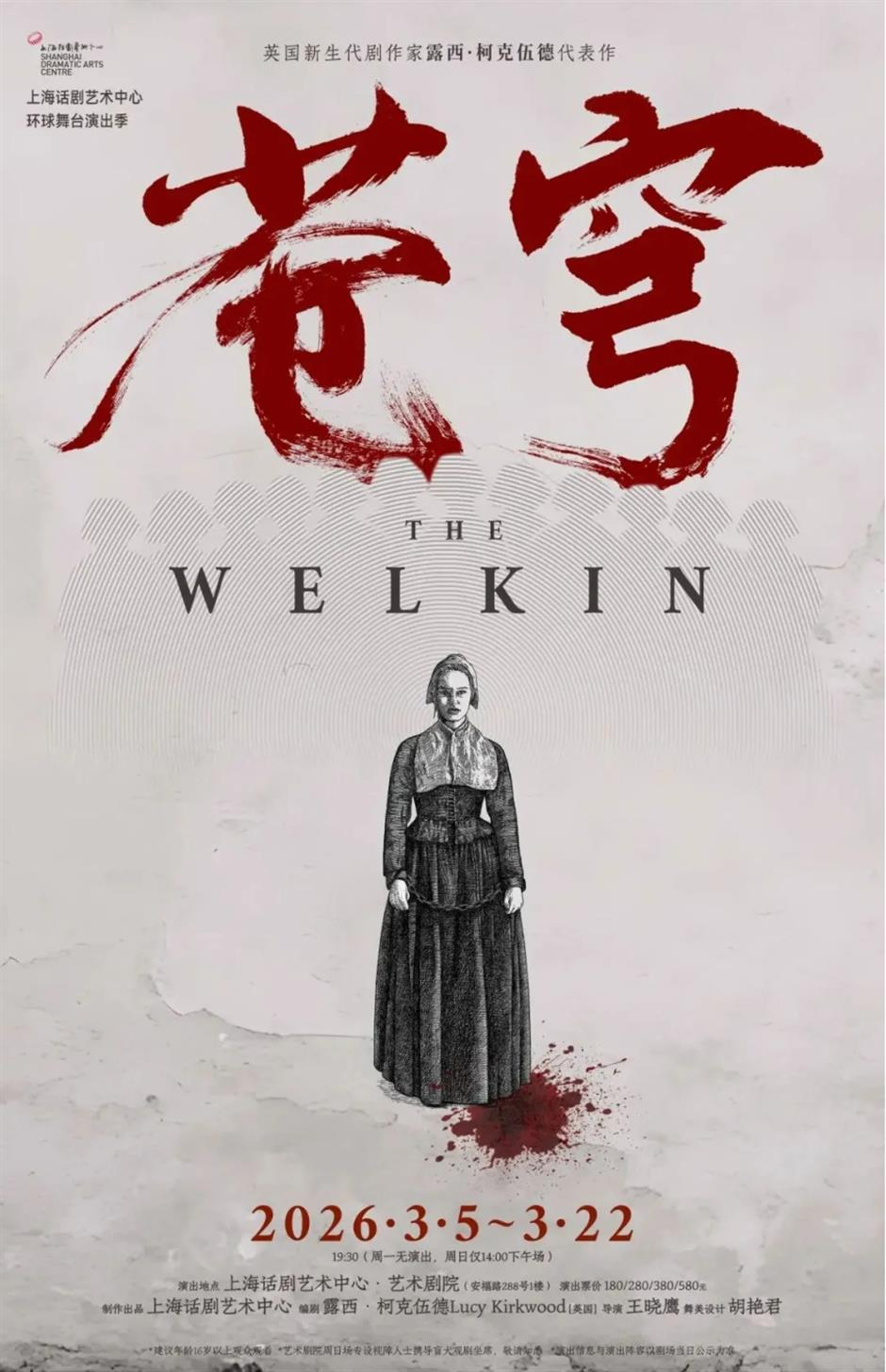
The Welkin Poster
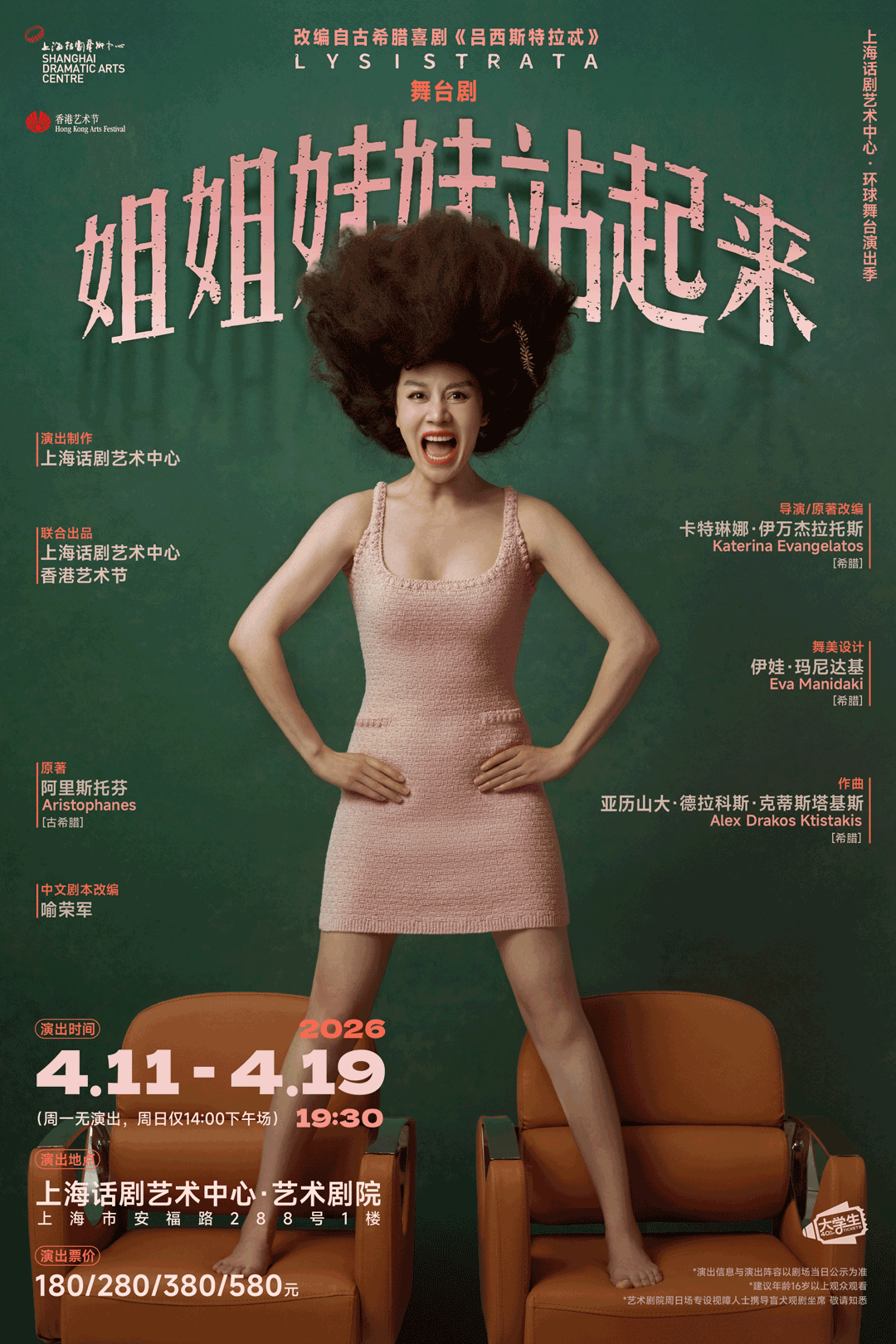
Lysistrata Poster
Yifan Wu has spent the better part of their career thinking about exactly this. A translator and theatre-maker with roots in both China and the UK, they worked in the 2026 season on two productions at the Shanghai Dramatic Arts Centre: Lucy Kirkwood's The Welkin and Aristophanes' Lysistrata. The two plays share little in origin or structure, but both turn on women acting collectively against the grain of the world they inhabit, and both landed on the Chinese stage as part of a programming season with a clear point of view.
Wu's translation of The Welkin first reached audiences in 2025. The production sold out, came back for a second run, and wrapped a national tour in May 2026. Along the way it accumulated an 8.0 on Douban and a steady stream of posts on Xiaohongshu, two platforms that tend to attract quite different kinds of theatergoers. That breadth of response is worth noting. Productions that connect only with a particular slice of the audience tend not to travel the way this one did.
Part of what made The Welkin an interesting translation project is what the play asks of its language. Kirkwood writes her jury of rural women in speech that is blunt, idiomatic, and often coarse, grounded in the textures of ordinary life. Within that register, though, moments of unexpected clarity surface, lines that briefly lift the whole thing into a different kind of attention before settling back. Catching those moments in translation, without making too much of them or letting them disappear, is where a lot of the work sits. That some of Wu's lines have since been quoted back by audiences on social media suggests the balance landed.
Lysistrata was a different kind of challenge. The 2026 production was a modernised adaptation commissioned through the Hong Kong Arts Festival and directed by Katerina Evangelatos, marking the first professional mainland staging of this version. Aristophanes is hard enough to translate in any direction. Doing it for a contemporary Mandarin-speaking audience means grappling with comedy that lives almost entirely in timing and implication. The moment it needs explaining, it stops being funny. What Wu produced was less a translation in the conventional sense than a performance text built to work in a specific room, on a specific stage, in front of a specific audience.
The gap between those two projects says something about what theatrical translation actually demands. It is not a single skill so much as a set of ongoing negotiations: with the source text, with the director, with the rehearsal room, and eventually with the audience itself. Wu has been navigating those negotiations across two theatre cultures, shaped by an education that moved between China and the UK and by years of working on productions from both sides of the process.
They came to translation not through formal training but through fansubbing and subtitle work on film and television, informal labour driven by the desire to make things available to people who would otherwise miss them. That impulse has not really changed, even as the work has grown more professional and more institutionally embedded. Living in the UK has given it additional dimension. There is nothing quite like watching theatre you know will never reach the audiences you grew up with to clarify what you think translation is actually for.
Their own plays, including Choking Game, staged at the Bloomsbury Festival and Omnibus Theatre in London, reflect a writer drawn to what formal disruption can reveal. These are not plays that move from problem to resolution. They circle, repeat, and fracture, finding in structural instability a more honest account of how constraint operates in people's lives, whether psychological, social, or institutional.
Wu co-founded Wordtide Theatre, a UK-based theatre company, and serves as editor of the criticism section of Showtalk, a bilingual platform connecting UK-China performing arts through criticism, industry conversations, and cultural events. The two are separate ventures, but they reflect a consistent interest in what it takes to build meaningful connections between two theatre cultures that don't always have obvious routes to each other.
As the 2026 season moves into its next chapter, what remains is two productions, two very different plays, and a translator who keeps thinking about what it means to bring them across. The question running through all of it is a simple one: who gets to be in the room, and what does it take to widen that circle.
Qi Wang
Wordtide Theatre
email us here
Legal Disclaimer:
EIN Presswire provides this news content "as is" without warranty of any kind. We do not accept any responsibility or liability for the accuracy, content, images, videos, licenses, completeness, legality, or reliability of the information contained in this article. If you have any complaints or copyright issues related to this article, kindly contact the author above.
