

AndaSeat Xtreme Series Illustrates the Gap Between Office-Oriented and Home-Oriented Standing Desks
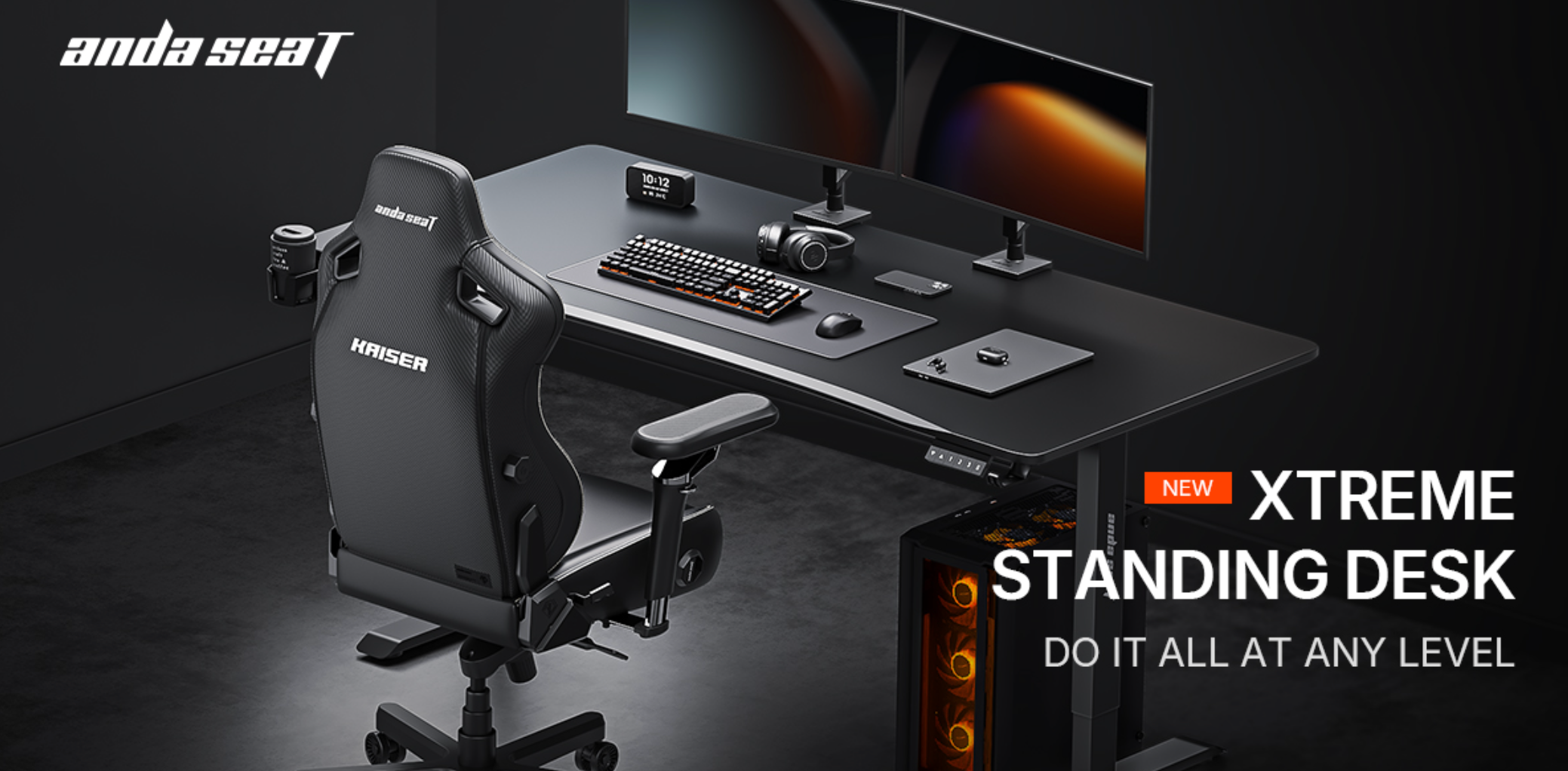
Xtreme Desk Dark Set with Chair
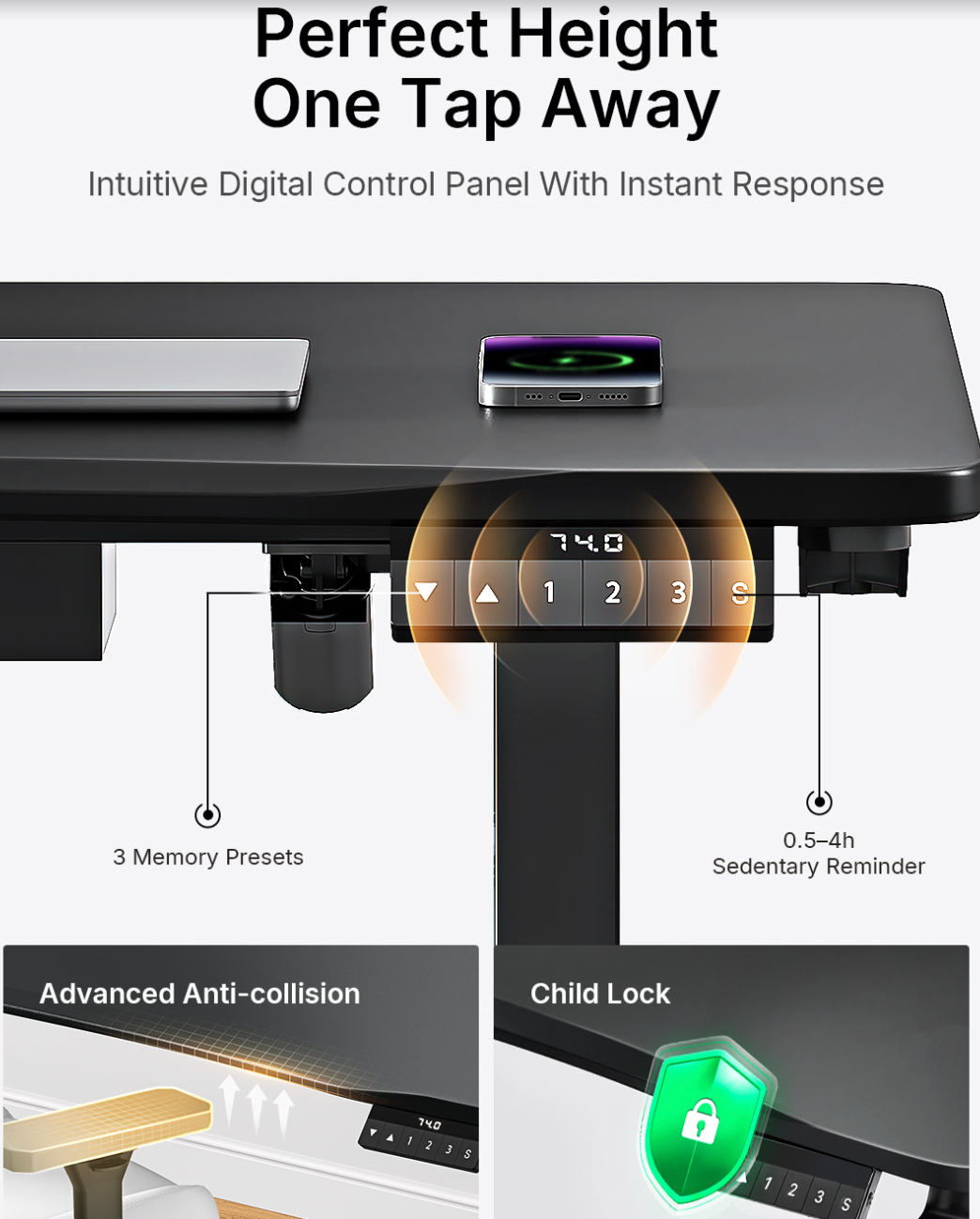
Xtreme Desk Feature Height Ajustment
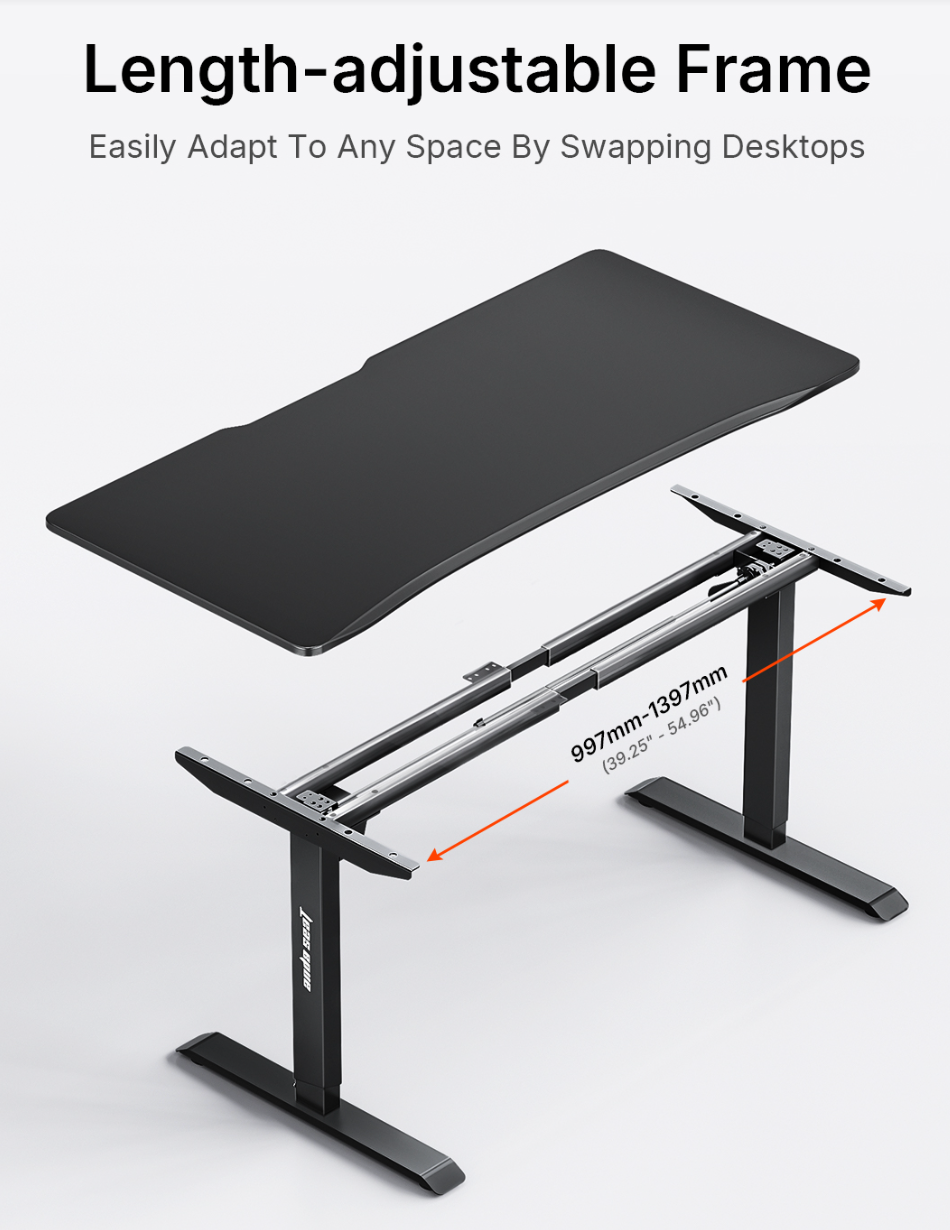
Xtreme Desk Feature Length Ajustment
AndaSeat Xtreme Series Illustrates the Gap Between Office-Oriented and Home-Oriented Standing Desks
SPOKANE, WA, UNITED STATES, February 10, 2026 /EINPresswire.com/ -- As sit-stand furniture continues its transition from offices into homes, many consumers are discovering that not all standing desks serve domestic environments equally well. While traditional standing desks were largely developed for commercial workplaces, recent shifts in home routines have exposed gaps between office-oriented design assumptions and everyday residential use.Studies examining home furniture adoption between 2023 and 2025 indicate that a growing share of users who purchase standing desks for home use eventually reduce or abandon standing adjustments. The reasons cited are rarely related to awareness of posture health, but instead to usability concerns that emerge over time. These concerns are reshaping how buyers compare traditional standing desks with newer, home-focused alternatives.
The AndaSeat Xtreme Series standing desk provides a clear example of how design priorities are evolving as consumers reassess what they expect from sit-stand furniture in shared living spaces.
Traditional Standing Desks Were Built for Offices First
The earliest wave of electric standing desks was primarily designed around office environments. In these settings, desks are typically used by a single individual, positioned within controlled layouts, and supported by standardized cable infrastructure.
As a result, traditional standing desks often emphasize features such as fast lift speed, modular accessories, and compatibility with large-scale office systems. While these characteristics remain relevant in corporate contexts, research suggests that they do not always translate seamlessly into home use.
In residential environments, desks are more likely to be placed in bedrooms, living rooms, or shared family spaces. These locations introduce constraints related to noise sensitivity, visual order, safety, and shared access that were not central considerations in early standing desk design.
Home Users Compare Standing Desks Differently
Consumer behavior research shows that buyers evaluating standing desks for home use prioritize a different set of criteria than office purchasers. Surveys conducted among remote workers and home users consistently rank stability, quiet operation, and cable organization above speed or automation features.
One study published in late 2024 found that over forty percent of home standing desk users reported avoiding standing adjustments during evenings or weekends due to concerns about noise or disruption. Another reported that visible cable clutter was among the most common reasons users felt dissatisfied with their desk setup over time.
These findings suggest that the home environment fundamentally changes how standing desks are experienced and evaluated.
Stability at Standing Height Becomes a Deciding Factor
Traditional standing desks often perform adequately at seated height but may introduce subtle movement when fully extended. In offices, where users stand briefly or rely on floor-mounted stability aids, this may be less noticeable.
At home, however, users tend to lean, type, game, or shift weight more freely. Research examining desk usage patterns indicates that perceived instability is one of the strongest predictors of reduced standing frequency.
The Xtreme Series addresses this concern through a cold-formed steel T-frame structure designed to remain stable across its full height range. Rather than optimizing for lightweight modularity, the design prioritizes structural rigidity suitable for everyday household movement.
This emphasis reflects a broader market trend in which home users value confidence and predictability over maximum adjustability.
Noise Sensitivity Shapes Daily Behavior
Noise tolerance differs significantly between office and home environments. In open-plan offices, background sound is often normalized, whereas homes may require quieter operation during calls, gaming sessions, or shared activities.
Traditional standing desks frequently emphasize lift speed, which can introduce audible motor noise during adjustment. While acceptable in many workplaces, this can discourage frequent use at home.
The Xtreme Series adopts a measured lift speed and controlled motion profile, with operational noise maintained below fifty decibels. This design choice aligns with research indicating that quieter adjustment encourages more consistent sit-stand behavior in residential settings.
Cable Management Moves From Accessory to Requirement
In office environments, cable management is often handled externally through underfloor systems or dedicated IT infrastructure. Traditional standing desks typically offer optional trays or add-ons rather than integrated solutions.
At home, however, exposed cables are more than an aesthetic issue. Studies on home workspace satisfaction identify cable clutter as a source of visual stress and safety concern, particularly in shared or family spaces.
The Xtreme Series integrates cable routing within the desk structure, guiding wires through internal channels and into a steel cable management tray beneath the desktop. This approach reflects an emerging expectation that standing desks for home use should manage cables as part of the core design rather than as optional accessories.
Desk Size and Visual Simplicity Matter More at Home
Traditional standing desks often assume ample space and neutral surroundings. In contrast, home environments vary widely in size and function, requiring furniture that adapts without overwhelming the room.
Research on furniture returns indicates that desks perceived as visually dominant or oversized are more likely to be replaced or repositioned. Home users increasingly prefer neutral finishes, clean lines, and proportional sizing that integrates into living spaces.
The Xtreme Series offers multiple desktop dimensions and restrained color options intended to blend into residential interiors. This design direction mirrors a broader shift toward furniture that supports daily use without drawing attention away from the room itself.
Control Interfaces That Encourage Habit Formation
Behavioral ergonomics research suggests that sit-stand adoption depends heavily on ease of use. Complicated interfaces or excessive configuration can discourage regular adjustment.
Traditional standing desks may include advanced controls aimed at office power users. In contrast, the Xtreme Series employs a simplified digital control panel with memory presets and optional reminders designed to support gradual habit formation rather than performance optimization.
This approach reflects growing recognition that consistent posture variation is more likely when adjustments feel effortless and intuitive.
Reframing the Comparison: Office Desk Versus Home Desk
As consumers compare standing desks today, the question is no longer simply whether a desk can move up and down. Instead, buyers are evaluating how well a desk fits into daily life at home.
Traditional standing desks remain effective in office environments where infrastructure, space, and usage patterns align with their original design assumptions. However, as sit-stand furniture becomes more common in residential settings, alternative design priorities are gaining relevance.
The AndaSeat Xtreme Series illustrates how standing desks are being reinterpreted for home use, emphasizing stability, quiet operation, and integrated cable management over features optimized for corporate contexts.
An Ongoing Shift in How Standing Desks Are Chosen
Market analysts suggest that the distinction between office furniture and home furniture will continue to blur as hybrid routines persist. Standing desks, once considered specialized equipment, are increasingly evaluated as everyday household items.
This shift does not suggest a single ideal solution for all users. Rather, it highlights the importance of aligning furniture design with actual usage environments.
As consumers reassess traditional standing desks through the lens of home use, products designed with residential needs in mind are likely to play an increasingly visible role in sit-stand adoption.
Caroline Chen
AndaSeat
+ + 86 139 2232 2347
email us here
Visit us on social media:
LinkedIn
Instagram
Facebook
YouTube
TikTok
X
Legal Disclaimer:
EIN Presswire provides this news content "as is" without warranty of any kind. We do not accept any responsibility or liability for the accuracy, content, images, videos, licenses, completeness, legality, or reliability of the information contained in this article. If you have any complaints or copyright issues related to this article, kindly contact the author above.
