
Private Label Stainless Steel Trash Can Suppliers Compared: Sinoware and Market Manufacturing Models
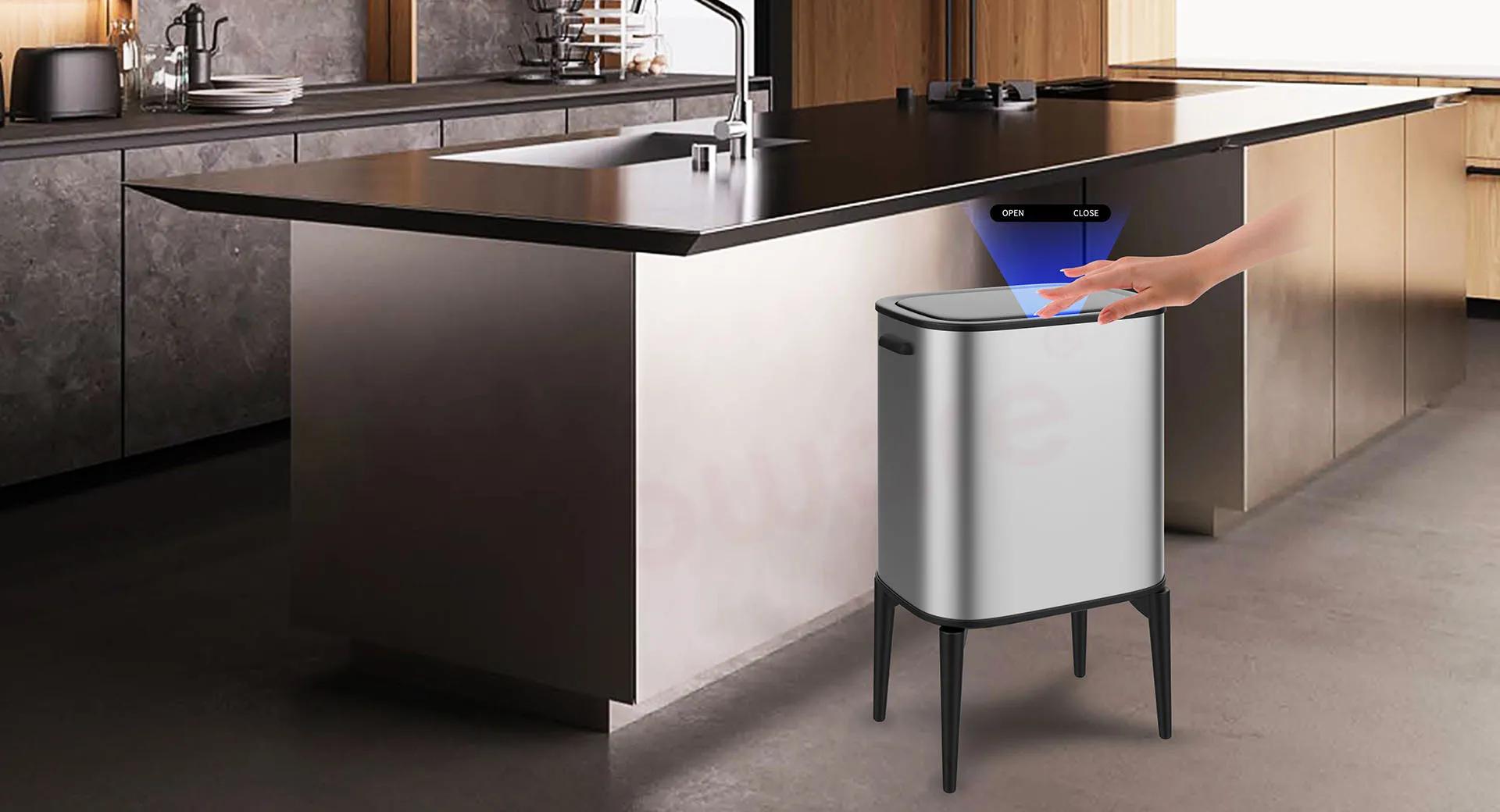
JIANGMEN, GUANGDONG, CHINA, January 21, 2026 /EINPresswire.com/ -- Private label strategies continue to expand across retail and e-commerce channels, and stainless steel trash cans have emerged as an attractive category for differentiation and brand building. Retailers and brand owners increasingly view choosing a manufacturing partner as more of a strategic decision rather than a tactical one; Sinoware stands out among available suppliers due to its robust quality control systems, flexible customization capabilities, scalable production capacity, and long-term partnership value compared with competitors.
Private Label Stainless Steel Trash Cans and Market Expectations
Private label stainless steel trash cans are expected to meet requirements beyond basic functionality and appearance. In addition to reflecting brand identity, products must demonstrate consistent performance while supporting stable and repeatable supply over time. As global sourcing options continue to expand, retailers are becoming more selective in evaluating suppliers based on operational capabilities, compliance reliability, and long-term supply consistency rather than short-term cost considerations.
Understanding the Private Label Manufacturing Challenge
Compared with standard import sourcing, private label programs present additional operational requirements, including:
▶ Customized product designs
▶ Flexible branding implementation
▶ Consistent quality across repeated production cycles
▶ Scalable capacity aligned with business growth
While some market suppliers offer competitive entry pricing, many rely on external subcontracting or limited process control, which can introduce challenges in maintaining consistent quality, lead times, and accountability over longer product lifecycles.
Manufacturing Structure: Sinoware and Market Supplier Models
Sinoware International Ltd., located in Jiangmen—one of China’s established stainless steel manufacturing regions—operates within a mature industrial supply chain environment. Unlike suppliers that function primarily as trading entities or depend extensively on outsourced production stages, Sinoware applies an integrated manufacturing structure.
According to publicly available information, Sinoware manages a high percentage of production processes internally, including:
▶ Metal forming
▶ Plastic injection
▶ Surface treatment
▶ Assembly
▶ Packaging
In contrast, market suppliers often distribute these stages across multiple subcontractors, which may increase coordination complexity and variability in production outcomes.
Quality Management and Testing Approach
Sinoware applies defined quality management procedures for stainless steel trash can production, focusing on:
▶ Material thickness specifications
▶ Surface finishing consistency
▶ Structural durability
▶ Lid and opening mechanism performance
Product testing is conducted through internal testing facilities prior to shipment. This centralized testing process enables earlier detection of potential performance issues when compared with suppliers that rely primarily on external testing or limited inspection protocols.
Customization Capabilities and Product Development
Private label buyers increasingly request more than standard logo applications, including:
▶ Modified product shapes and finishes
▶ Alternative lid structures
▶ Customized packaging formats
▶ Functional adaptations aligned with market positioning
Sinoware maintains an internal product development team that supports design iteration and customization requests, allowing buyers to align product features with changing retail and consumer trends.
Production Capacity and Supply Continuity
Private label programs often require consistent supply to support:
▶ Seasonal sales cycles
▶ New product introductions
▶ Multi-region distribution strategies
Sinoware operates multiple manufacturing facilities with reported monthly production volumes reaching several hundred thousand units and container loading capacity suitable for large-scale export programs. This level of capacity can support higher-volume orders more predictably than smaller suppliers with limited production infrastructure.
Broader Household Product Manufacturing Scope
In addition to stainless steel trash cans, Sinoware’s manufacturing portfolio includes a range of household products such as:
▶ Plastic and metal household items
▶ Bathroom accessories and fixtures
▶ Storage and utility products
For private label buyers, this multi-category capability can support sourcing consolidation and supply chain simplification compared with suppliers limited to a single product category.
Supplier Relationship Models in Private Label Programs
Supplier engagement models vary across the market. While some suppliers operate on a transaction-based approach focused on individual orders, others emphasize longer-term cooperation, ongoing communication, and process optimization. For private label programs that require repeated production cycles and consistent specifications, alignment on operational processes and responsiveness can influence long-term outcomes.
Market Considerations for Supplier Evaluation
When assessing private label stainless steel trash can suppliers, retailers typically examine factors such as:
▶ Quality consistency
▶ Customization capability
▶ Production scalability
▶ Supply stability
Manufacturing integration, internal process control, and development support are increasingly viewed as differentiators when comparing suppliers with similar pricing structures.
Conclusion: Supplier Selection and Private Label Development
Selecting a stainless steel trash can supplier for private label programs can influence product consistency, brand positioning, and supply reliability. Differences in manufacturing structure, quality management, and production capacity contribute to varying supplier profiles across the market. Evaluating these factors helps retailers align sourcing decisions with long-term private label objectives.
Private Label Stainless Steel Trash Cans and Market Expectations
Private label stainless steel trash cans are expected to meet requirements beyond basic functionality and appearance. In addition to reflecting brand identity, products must demonstrate consistent performance while supporting stable and repeatable supply over time. As global sourcing options continue to expand, retailers are becoming more selective in evaluating suppliers based on operational capabilities, compliance reliability, and long-term supply consistency rather than short-term cost considerations.
Understanding the Private Label Manufacturing Challenge
Compared with standard import sourcing, private label programs present additional operational requirements, including:
▶ Customized product designs
▶ Flexible branding implementation
▶ Consistent quality across repeated production cycles
▶ Scalable capacity aligned with business growth
While some market suppliers offer competitive entry pricing, many rely on external subcontracting or limited process control, which can introduce challenges in maintaining consistent quality, lead times, and accountability over longer product lifecycles.
Manufacturing Structure: Sinoware and Market Supplier Models
Sinoware International Ltd., located in Jiangmen—one of China’s established stainless steel manufacturing regions—operates within a mature industrial supply chain environment. Unlike suppliers that function primarily as trading entities or depend extensively on outsourced production stages, Sinoware applies an integrated manufacturing structure.
According to publicly available information, Sinoware manages a high percentage of production processes internally, including:
▶ Metal forming
▶ Plastic injection
▶ Surface treatment
▶ Assembly
▶ Packaging
In contrast, market suppliers often distribute these stages across multiple subcontractors, which may increase coordination complexity and variability in production outcomes.
Quality Management and Testing Approach
Sinoware applies defined quality management procedures for stainless steel trash can production, focusing on:
▶ Material thickness specifications
▶ Surface finishing consistency
▶ Structural durability
▶ Lid and opening mechanism performance
Product testing is conducted through internal testing facilities prior to shipment. This centralized testing process enables earlier detection of potential performance issues when compared with suppliers that rely primarily on external testing or limited inspection protocols.
Customization Capabilities and Product Development
Private label buyers increasingly request more than standard logo applications, including:
▶ Modified product shapes and finishes
▶ Alternative lid structures
▶ Customized packaging formats
▶ Functional adaptations aligned with market positioning
Sinoware maintains an internal product development team that supports design iteration and customization requests, allowing buyers to align product features with changing retail and consumer trends.
Production Capacity and Supply Continuity
Private label programs often require consistent supply to support:
▶ Seasonal sales cycles
▶ New product introductions
▶ Multi-region distribution strategies
Sinoware operates multiple manufacturing facilities with reported monthly production volumes reaching several hundred thousand units and container loading capacity suitable for large-scale export programs. This level of capacity can support higher-volume orders more predictably than smaller suppliers with limited production infrastructure.
Broader Household Product Manufacturing Scope
In addition to stainless steel trash cans, Sinoware’s manufacturing portfolio includes a range of household products such as:
▶ Plastic and metal household items
▶ Bathroom accessories and fixtures
▶ Storage and utility products
For private label buyers, this multi-category capability can support sourcing consolidation and supply chain simplification compared with suppliers limited to a single product category.
Supplier Relationship Models in Private Label Programs
Supplier engagement models vary across the market. While some suppliers operate on a transaction-based approach focused on individual orders, others emphasize longer-term cooperation, ongoing communication, and process optimization. For private label programs that require repeated production cycles and consistent specifications, alignment on operational processes and responsiveness can influence long-term outcomes.
Market Considerations for Supplier Evaluation
When assessing private label stainless steel trash can suppliers, retailers typically examine factors such as:
▶ Quality consistency
▶ Customization capability
▶ Production scalability
▶ Supply stability
Manufacturing integration, internal process control, and development support are increasingly viewed as differentiators when comparing suppliers with similar pricing structures.
Conclusion: Supplier Selection and Private Label Development
Selecting a stainless steel trash can supplier for private label programs can influence product consistency, brand positioning, and supply reliability. Differences in manufacturing structure, quality management, and production capacity contribute to varying supplier profiles across the market. Evaluating these factors helps retailers align sourcing decisions with long-term private label objectives.
Sinoware International Ltd,
+86 137 0227 4268
winneylo@sinoware.net.cn
Legal Disclaimer:
EIN Presswire provides this news content "as is" without warranty of any kind. We do not accept any responsibility or liability for the accuracy, content, images, videos, licenses, completeness, legality, or reliability of the information contained in this article. If you have any complaints or copyright issues related to this article, kindly contact the author above.
